• Sections
Personal tools
**
You are here: Home Documents Project Related Documents Log-Frame Analyses

Log-Frame Analyses

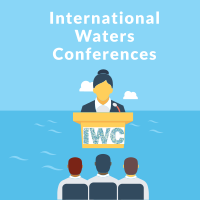
GEF 2nd Biennial International Waters Conference from Sep 24, 2002 09:00 PM to Sep 29, 2002 08:00 PM
The Global Environment Facility (GEF) hosted its second Biennial International Waters Conference to review GEF's global International Waters portfolio (over $600 million allocated) and to share experiences and best practices for international waters management.Primary objectives of the conference are to foster knowledge sharing and collaboration between participating governments, GEF International Waters project managers, GEF Implementing and Executing agencies, and the private and non-profit sectors.
Filesummary report
Fileparticipants
IWC2 (2003)
The Global Environment Facility (GEF) hosted its second Biennial International Waters Conference to review GEF's global International Waters portfolio (over $600 million allocated) and to share experiences and best practices for international waters management.ÊÊPrimary objectives of the conference are to foster knowledge sharing and collaboration between participating governments, GEF International Waters project managers, GEF Implementing and Executing agencies, and the private and non-profit sectors.
The First Global Environment Facility International Waters Conference - Agenda, Report, Presentations
Agenda, report and presentations from the 1st Biennial GEF International Waters Conference in Budapest, Hungary, 14-18 October 2000.
IWC1 (2000)
1st Biennial GEF International Waters Conference in Budapest, Hungary, 14-18 October 2000
FileTransboundary Diagnostic Analysis(TDA) for the Arafura and Timor Seas Region
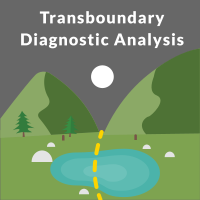
The purpose of this Regional Transboundary Diagnostic Analysis is to provide an overview of five priority transboundary issues (i.e. unsustainable fisheries, habitat degradation, pollution, loss of biodiversity and impacts of climate change) and their impacts on ecosystem services and human well-being in the Arafura and Timor Seas region. The TDA identifies the key drivers of environmental degradation and links them to their causal sectors. The purpose is to provide sufficient levels of detail to give confidence in the analyses and recommendations for the future Strategic Action Programme (SAP) to be developed for the ATS.
ImagePemsea 34
photo-gallery
ImageDanube River Basin-Romania1
photo-gallery
ImageDanube River Basin-Romania2
photo-gallery
Photos
Photos and other media
Outreach materials
newsletters, brochures.
FileMediterranean Sea
Maps/Graphics
Maps and Graphics
FileMED Partnership LME- Project brief
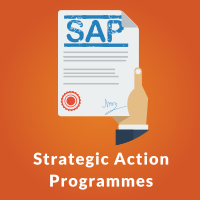
The countries of the Mediterranean basin recognize that they need a more coordinated and innovative approach to the implementation of the SAPs that accelerates on-the-ground implementation of priority actions and removes the institutional, financial and technical barriers to investments.
Project Documents
project document, fact sheets, annexes...
FileMediterranean LME-TDA
The Mediterranean countries, recognized that there is a need for a coordinated and innovative approach for the implementation of policy reforms, priority interventions and investments that address transboundary pollution and biodiversity conservation priorities identified in the two SAPs and the NAPs. Accordingly, they have agreed on a collective effort for the protection of the environmental resources of the Mediterranean, the Strategic Partnership for the Mediterranean Sea Large Marine Ecosystem, led by UNEP and the World Bank, co-funded by the GEF and involving other relevant agencies, IFIs and bilateral and multilateral donors. The Partnership will serve as a catalyst in leveraging policy/legal/institutional reforms as well as additional investments for reversing degradation of the Mediterranean Sea Basin, with its coastal habitats and marine living resources.
Technical Reports
TDAs, SAPs ...
FileNews_TheMedPartnership_14Jul11
News_TheMedPartnership_14Jul11
FileNews_TheMedPartnership_2Jul11
News_TheMedPartnership_2Jul11
Document Actions