
Orange-Senqu River Basin: Preliminary Transboundary Diagnostic Analysis
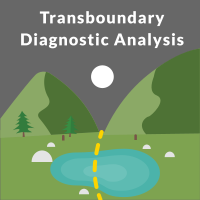
Adopted by ORASECOM in April 2008, the GEF IW TDA/SAP “best practice” approach underpins the methodology used in the development of the Orange-Senqu River Basin TDA. Consequently the methodology for the TDA consists of the following steps: • Identification and initial prioritisation of transboundary problems • Gathering and interpreting information on environmental impacts and socio-economic consequences of each problem • Causal chain analysis (including root causes) • Completion of an analysis of institutions, laws, policies and projected investments. It focuses on transboundary problems without ignoring national concerns and priorities and identifies information gaps, policy distortions and institutional deficiencies. The analysis is cross-sectoral and examines national economic development plans, civil society (including private sector) awareness and participation, the regulatory and institutional framework and sectoral economic policies and practices. Causal Chain Analysis (CCA) is one of the most useful aspects of the TDA for the development of future corrective actions. The causal chain should relate the transboundary problems with their impacts, immediate physical causes and their social and economic underlying root causes.
 Orange-Senqu River Basin: Preliminary Transboundary Diagnostic Analysis.pdf