
You are here: Home About Events IWC6 (2011) IWC6 Agenda and Outputs (Presentations)

IWC6 Agenda and Outputs (Presentations)

Detailed agenda as well as presentations and other outputs from the 6th GEF Biennial International Waters Conference in Dubrovnik, Croatia - October 2011
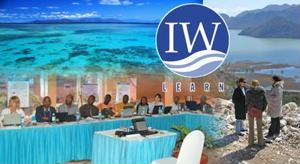
 

Raising the Bar: 20 Years of GEF Transboundary Water Results

The Sixth GEF Biennial International Waters Conference
Dubrovnik, Croatia

17-20 October 2011


Click here to see the agenda-at-a-glance

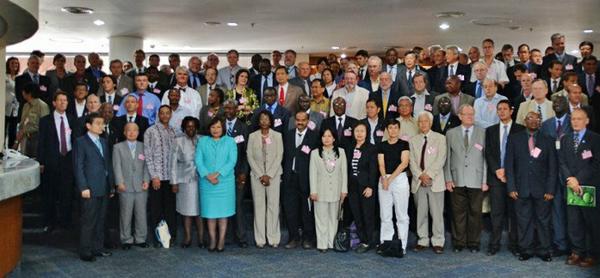
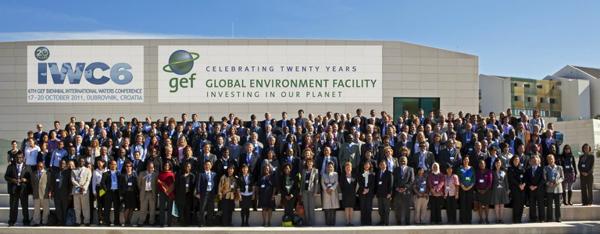
IWC6 Participant Photobook

Conference Objective

The sixth biennial portfolio conference has the objective of facilitating experience sharing across the GEF International Waters portfolio with a special emphasis on transboundary waters management results of the GEF International Waters Portfolio after twenty years.

Conference Key Outputs

  • Key results from the past 20 years identified, as well as the methods and barriers to sustaining those results
  • New mechanisms for greater private sector involvement and public-private partnerslothips in future GEF IW projects discussedbre
  • Experiences and good practices shared among GEF IW projects

A full conference results framework will be posted separately. Objectives, outputs and desired outcomes for certain sessions are detailed in-line.

Saturday 15 October

Targeted Workshops for GEF Project Managers and GEF Agency Staff

Targeted workshops for GEF IW project managers and agency staff on project management, legal & institutional frameworks and the revision to the revision to the Transboundary Diagnostic Analysis/Strategic Action Programme course & methodology

Session Coordinator: Mish Hamid, IW:LEARN

Consultation on the Draft GEF IW Project Implementation Guide

Location: Main Lecture Hall, Breakout Rooms (E3 & E2)

Workshop Coordinator: Peter Whalley

This workshop is aimed at project managers, project staff and Agency staff. It provides a forum for the exchange of views on the preliminary outline and contents of the IW:LEARN proposed Project Managers’ Manual, and an opportunity for project staff to raise general issues of GEF IW project management with a panel of Agency representatives. The comments and discussions of both these activities will feed into the further development of the Project Managers’ Manual and help address the needs of project staff by providing example driven guidance based on IW experiences. GEF IW Projects are encouraged to bring issues that have or are causing problems related to GEF project management requirements to the workshop to share and explore potential solutions with the Agency panel and participants.

Session Goals Part One:

Objectives
  • Enhance awareness and appreciation of lessons learned and experiences regarding the good governance of international waters including within and between international surface water, international groundwater and international large marine ecosystems (LMEs).
Outputs
  • Presentations, draft Reference and Training Manual and internet based materials
Desired Outcomes
  • Enhanced awareness and appreciation of lessons learned and experiences with the good governance of international waters

Session Goals Part Two:

Objectives
  • Round-tables to bring in perspectives from the family of GEF IW projects to help define governance targets and build on governance approaches in the GEF IW Portfolio.
Outputs
  • Feedback from the GEF IW portfolio and forge useful links for injecting governance messages
  • This fact-finding event will also be good pre-cursor to the GEF Groundwater Governance Conference that the groundwater governance project will organize

Sunday 16 October

Training Workshops for GEF Project Managers and GEF Agency Staff (continued…)

Please note that conference registration will be open all day, from 0900-1200 at the Villa Elisa (Entrance Foyer), and from 1200 to 1800 at the Valamar Lacroma Dubrovnik (Registration Desk at Entrance to the Business Centre).

0800-1500

Development of TDA’s and SAP’s: A Revision of the Methodology and Course
Location: Main Lecture Hall, Villa Elisa
Workshop Coordinator: Martin Bloxham, The Barefoot Partnership (GEF IW:LEARN)

Under the current IW:LEARN Full Sized Project titled "Strengthening IW Portfolio Delivery and Impact”, Component 5 (a) requires the development of a “revised GEF IWTF endorsed TDA/SAP methodology and training course that is fit for purpose; simple to understand and use; stepwise in its delivery; global in its applicability; flexible in use; relevant to both scientists and policy makers; and results in good outcomes for transboundary water systems.

This session, aimed at project managers, project staff and Agency staff, will present 2 highly interactive and collaborative events introducing key components of the revised TDA/SAP methodology & training course. After setting the scene by helping the participants understand the origins of the TDA/SAP approach, its history and the need for the revision, the participants will take part in a Taster Workshop based around TDA development and SAP formulation. Using the Adriatic Sea as the scenario, the workshop will initially guide the participants through the identification of transboundary problems affecting the area, The workshop will then encourage the participants to set a vision for the future, define goals to meet the vision, and identify new innovations to achieve the goals and vision and reduce the impact of the identified transboundary problems.

Note: Participants are encouraged to bring issues that have or are causing problems related to TDA/SAP development to the workshop to share and explore potential solutions with the panel of project managers and Agency representatives.

Session Goals:

Objectives
  • To present the key highlights of the revised approach to the TDA/SAP methodology & training course.
Outputs
  • Presentations made available online
  • Feedback questionnaire to all participants
Desired Outcomes
  • Increased participant awareness of the revised TDA/SAP approach
  • Feedback from the participants on what works well and what needs further work

0900-1800

Official Arrival and Registration

Location: Villa Elisa Entrance Foyer (0900-1130), Valamar Lacroma - Business Center – Registration Desk (1200-1800)

Participants are asked to register themselves at the Valamar Hotel and Conference Centre (or the Villa Elisa) and receive their welcome kits.

1400-1800

Innovation Marketplace – Exhibit Center Set-Up
Location: Valamar – Exhibit Area, Business Centre
Session Coordinator:

Participants will set-up their exhibits in the innovation marketplace.

1430-1630

Nutrient Reduction Best Practice Technical Training
Location: Room E3, Villa Elisa
Session Coordinator: Chuck Chaitovitz, Global Environment and Technology Foundation (Nutrient Reduction Best Practices)al

There is a pressing need for more integrated and multi-disciplinary assessment of nutrient sources and effects which can help distil the complexity and range of nutrient issues into a clearer governance focus. In embracing the exchange of lessons learned and best practices and approaches from initiatives from around the world, management tools can be offered relevant to the type of action being sought, or re-purposed to meet the needs of users and producers at the appropriate level, such as farms and watersheds. Partnerships among nutrient stakeholders at all levels – global, regional and national –can play an important role in facilitating such exchange and re-purposing. The Global Partnership on Nutrient Management (GPNM) can play an important role in triggering strategic discussion, advocacy and action among countries on more effective nutrient management

The GPNM can help:

• identify and foster opportunities which can be applied by countries or scaled up as part of a more concerted national and international effort

• mainstream these best practices and approaches within countries so that effective nutrient management is embedded and benefits realized

This training session (s) will provide a “primer” on what, how and why to develop systems of nutrient reduction best practices, as inventoried for global policy toolbox.

Prepared by: Dr. Art Gold, Professor, University of Rhode Island (“Global foundations for reducing nutrient enrichment and oxygen depletion from land based pollution, in support of Global Nutrient Cycle)

Presentation: Dr. Tom Simpson, Water Stewardship, Inc.

Session Goals:

Objective:

The objectives of this training session are to train regional/national policy experts and GEF project managers: 1) regarding implementation and adoption of nutrient management best practices; and 2) in the use of policy tool box

Outputs:
  • Training of 20 to 50 GEF PMs and Ministerial contacts
Outcomes:
  • Awareness of the costs of practices
  • Capacity among participants (Ministerial contacts and GEF PMs) to implement practices
  • Awareness and feedback on the policy tool box

1430-1730

Workshop on Global Warming, Climate Change, and Large Marine Ecosystems
Location: Villa Elisa, Large Lecture Hall
Session Coordinators: Kenneth Sherman and Marie-Christine Aquarone, U.S. National Oceanographic and Atmospheric Administration
Co-rapporteurs: Marie-Christine Aquarone & Andrew Hume, Global Environment Facility

The session will assemble the latest information on the science of warming and change in LMEs; share science information with practitioners, promote discussion; and foster a basis for the involvement of the community of practice and sustainability science community.

PANEL 1

Facilitator: Marie-Christine Aquarone

  • Opening Remarks on the Session
    Kenneth Sherman
  • Discussion

PANEL 2

Facilitator: Galen McGovern

  • Discussion

PANEL 3

Facilitator: Mick O’ Toole

Session Goals:

Objective:

The objectives include: to assemble latest in information on science of warming and change in LMEs; share science information with LME practitioners, promote discussion; and foster a basis for a community of practice and involvement of sustainability science community.

Outputs:
  • Rapporteur summary for plenary and LME sessions Thursday; presentations and papers that can be assembled.
Outcomes:
  • Awareness of changes in LMEs; consensus for a Community of Practice for LMEs; publication of a book entitled: The Recovery and Development of Large Marine Ecosystems During Climate Change

1800-2000

Welcome Reception
Location: Hotel President Terrace

Day 1 - Monday 17 October – Participant Welcome and Considering IW Results

Day 1 Chair: Stephen Maxwell Donkor, Guinea Current Large Marine Ecosystem project

0900-0920

Welcome Reflections Video & Expectations
Location: Elafiti Rooms 3-4

A short video covering the past IWC’s, the regional context and the objectives of this conference, including participant expectations will be displayed.

0920-1045

Welcome from the Global Environment Facility
Location: Elafiti Rooms 3-4

Mr. Andre LaPerriere, Deputy Chief Executive Officer, The Global Environment Facility & Followup Remarks

Keynote Welcome Addresses

Fritz Holzwarth, Deputy-Director General, Ministry of Environment, Nature Protection and Nuclear Safety, Germany

Maria Luisa Silva Mejias, Coordinator, UNEP Mediterranean Action Plan

Zdravko Krmek, State Secretary, Croatian Minister of Regional Development, Forestry and Water Management

Andro Vlahusic, Mayor, Dubrovnik Municipality

Raising the Bar: A Focus on Sustaining Results

Speaker: Alfred Duda, Senior Advisor, International Waters, Global Environment Facility

The GEF Secretariat will explain the theme and objective for this Sixth GEF IW portfolio conference.

1045-1130

Networking Break & Refreshments
Location: Business Centre (Innovation Marketplace)

The networking break, besides allowing time to refresh one’self, allows time for bilateral networking. The conference will also feature project presentations in designated rooms during this time.

1130-1300

Adriatic/Mediterranean Host Region Panel
Location: Elafiti Rooms 3-4
Session Coordinator: Iouri Oliounine, GEF IW:LEARN/UNESCO

The purpose of the session, an IWC tradition is to highlight results and achievements from the GEF IW portfolio in the Mediterranean region (particularly in the immediate sub-region of the Conference) and share knowledge and experiences on managing shared groundwater, river, lake and marine ecosystems along the Adriatic Sea coast, the Dinaric Alps and beyond. The session will also provide an overview of the work of the Ballast Water Partnerships, which recently welcomed Croatia to its participating countries. Finally, the audience will be given an opportunity to provide feedback and share similar experiences in a question and answer session.

Session Goals:

Objectives
  • Share regional experiences and best practices from the host region to inform the IW portfolio

Outputs
  • Presentations

Desired Outcomes
  • Other projects mainstream shared experiences and approaches

1300-1430

Lunch
Location: Lacroma Restaurant

1430-1630

Dialogues on Identifying and Discussing Project Results
Location: Elafiti Rooms 2-4
Session Coordinators: Session Coordinators: Erik de Ruyter, Nemanja Trifunovic and Edwin Hes, UNESCO-IHE Institute for Water Education

Ecosystem-based working groups discuss with professional facilitation, the results of the IW portfolio and carrying them forward. The group will meet first in plenary and then break into workin groups by ecosystem.

1630-1700

Networking Break & Refreshments
Location: Business Centre (Innovation Marketplace)

The networking break, besides allowing time to refresh one’self, allows time for bilateral networking.

1700-1800

Interactive Event on Results
Location: Elafiti Rooms 2,3,4
Session Coordinators: Andrew Hudson, United Nations Development Programme, Andrew Hume, Global Environment Facility

An interactive exercise to test knowledge on GEF policy and procedures, GEF5, the IW focal area and results based management.

1800-2000

MedPartnership Demonstration of IPad Application
Location: Elafiti 1
Session Coordinatior: Giorgos Petridis, MedPartnership


Film Festival/Innovation Marketplace Review
Location: Business Centre and Business Centre Terrace

The innovation market place (or exhibit area) will feature poster sessions showcasing project results and achievements. In addition, awards will be given for the best innovation marketplace exhibit (this will be in addition to the website competition). Participants are invited to rate exhibits showcasing IW projects and lessons learned. In addition, a film festival of the latest IW project films will be run. The projects, if available, will be asked to take a question following the film.

Films to be Premiered

  • “Lake Tanganyika Pollution” – Premiere, Lake Tanganyika
  • Tanganyika is Not a Trashcan, Lake Tanganyika
  • Uab, Pacific IWRM
  • Oceanic Guardians, Pacific Fisheries
  • IWRM, The Pacific Way, Pacific IWRM project
  • Interim Guinea Current Commission the GCLME project, Guinea Current LME

Innovation Marketplace Goals:

Objective
  • Participating projects share experience and knowledge on their innovation
Outputs
  • Exhibits at the innovation marketplace
Desired Outcome
  • Successful scientific and technical innovation and lessons from GEF IW project experience shared across global portfolio.

1830

UNOPS Project Consultation
Location: Asimon Room
Session Coordinator: Katrin Lichtenberg, United Nations Office for Project Services

Day 2 - Tuesday 18 October – GEF IW Ecosystem Project Site Visits

0700 - Late

Technical site visits will include marine, surface freshwater and groundwater watershed management options for participants, and these will showcase integrated water and other natural resource management issues (such as mariculture, wastewater treatment, transboundary hydroelectric production); as well as local innovations and best practices aimed at addressing those issues and consequences. For the first time ever, all site visits will be to GEF IW projects and in most cases will showcase transboundary management.

1. Mljet Island, Departure: 0930
2. Ston & Neretva River Delta (travel thru Bosnia & Herzegovina), Departure: 0830
3. Trebišnjica River & Dinaric Karst (travel to Bosnia & Herzegovina), Departure: 0800
4. Skadar-Shkodra Lake (travel to Montenegro), Departure: 0700

All trips depart from the Foyer of Valamar Lacroma! Further information regarding the site visits is available at: http://iwlearn.net/abt_iwlearn/events/iwc6/iwc6-site-visit

Day 3 - Wednesday 19 October - GEF5, Sustaining GEF IW Results Through Commissions and Private Sector Engagement

0900-0915

Reflections Video & Feedback
Location: Elafiti Rooms 2-4

A short video will be displayed covering events of the previous day and also participant views.

0915-1045

Dialogue of Small Table Dialogues Outcomes: Sustaining and Applying Project Results
Location: Elafiti Rooms 2-4

Session Coordinators: Session Coordinators: Erik de Ruyter, Nemanja Trifunovic and Edwin Hes, UNESCO-IHE Institute for Water Education, Maarten van Rijn, Silent Partners

The second part of this key conference session will review the outcomes of the previous session, namely, what are the key results of the IW portfolio after 20 years. This second round of discussion will focus on two new key questions:

  1. How can these results be sustained?
  2. What are the barriers to sustaining these outcomes/results?

1045-1130

Networking Break & Refreshments
Location: Business Centre (Innovation Marketplace)

The networking break, besides allowing time to refresh one’self, allows time for bilateral networking. The conference will also feature project presentations in designated rooms during this time.

Break-time Project Presentations

Benguela Current LME
Nico Willemse
Location: Bokar Room

Coral Triangle Initiative Timor & Arafura Seas LME
Tonny Wagey
Location: Elafiti 2

Areas Beyond National Jurisdiction
Jeremy Turner, Food and Agricultural Organization of the United Nations
Location: Elafiti 1

Mediterranean TEST Project Presentation
Roberta de Palama, Exima/UNIDO
Location: Asimon Room

1130-1300

A Briefing on Developments in GEF International Waters
Location: Elafiti Rooms 3-4

Session Coordinator: Ivan Zavadsky, Global Environment Facility

  • Opening Briefing
  • GEF IW Task Force Panel

Andrew Hudson, UN Development Programme
Isabelle van der Beck, UN Environment Programme
John Fraser Stuart, World Bank
Marilou Drilon, Asian Development Bank
Jacob Burke, Food and Agricultural Organization
Igor Volodin, UN Industrial Development Organization
Annette Kilmer, Inter-American Development Bank
Thomas Hammond, GEF Scientific and Technical Advisory Panel

  • Latest Updates
    Chris Severin, Global Environment Facility
  • Setting the Learning Agenda: IW:LEARN & GEF Communities of Practice

Discussion:
Mish Hamid [IWL3 Presentation] & Khristine Custodio [Platform Presentation], GEF IW:LEARN
Mark Smith & Stefano Barchiesi, International Union for the Conservation of Nature
Holger Treidel & Lucilla Minelli, UNESCO – International Hydrological Programme
[Joint Presentation on Communities of Practice]

1300-1430

Lunch
Location: Lacroma Restaurant

1430-1600

Private Sector Engagement Roundtable
Location: Elafiti Rooms 3-4
Session Coordinator: Chuck Chaitovitz, Global Environment and Technology Foundation

Moderator: Joseph Weiler, University of British Columbia, Faculty of Law/Vancouver Olympic Games Committee

Panelists:
Ray Dowbenko, Agrium
Kadri Ozen, Coca-Cola Eurasia
Tony Baynes, Coca-Cola – Hellenic Bottling Company
Mark Smith, The Nature Conservancy
Jose Matheickal, International Maritime Organization (Ballast Water Partnerships project)
Yihang Jiang (Yellow Sea Large Marine Ecosystem project)
Raphael Lotilla, PEMSEA (East Asian Seas project) [Presentation]

This session will be a roundtable/panel discussion on involvement of the business community in GEF IW projects. Panelists will include representatives of GEF projects, the private sector and institutions that have benefited from private sector support. Five or more Vice President’s of Sustainability, Environment or Water will have approximately 10 to 15 minutes to discuss how engaging the GEF can support their corporate social responsibility and sustainability goals. Then, the panelists will be asked to address the competitive advantages of sustainable development around the context of the framework outlined above and how they might create a value proposition to promote private sector leadership in GEF IW projects. Five questions will be posed to each panelist. Examples of these questions might include:

1. What are some of the key market drivers and barriers to participating in GEF IW projects? These can include return on investment gains; protecting and strengthening brand image; and, risk reduction. Barriers could be the transaction costs and bureaucratic processes of participation. What short term and long term steps should private organizations, governments and the GEF take to encourage these drivers and remove barriers?

2. What are “lessons learned” from any previous engagement with the GEF and how can businesses begin to change their approach to ensure partnerships are more successful?

3. What is the ideal solution/scenario to promote private sector leadership in GEF projects and what steps are required to make it happen and improve GEF IW sustainability?

4. How do we need to adjust our performance measurement of GEF IW projects to clarify the competitive advantages of private sector involvement? This might include adopting a long term vs. short-term view, developing new measures and indicators of our project performance, and implementing new tools/systems for efficient project management and engagement.

5. How can private sector partnerships encourage progress towards GEF project sustainability? Are there innovative business models that can make GEF projects more attractive investments for private sector partners? What are they?

Roundtable Goals:

Objectives
  • Fostering more effective relationships between the GEF and leading companies and NGOs;
  • Addressing the market drivers and barriers for private sector leadership in GEF IW projects;
  • Identifying business models that will help make GEF IW projects more attractive investments for private sector partners to participate; and,
  • Enlisting participation from companies to participate in international waters demonstration projects during 2012 and 2013, where feasible.
Outputs
  • At least ten lessons learned that can help with more effective design of GEF IW projects
  • At least one viable business model and lowered transaction costs of GEF project approval process
  • A well-developed strategy with buy in from the companies and the GEF secretariat
  • An agreed statement of value offered to private sector partners

1600-1630

Networking Break & Refreshments

Location: Business Centre (Innovation Marketplace)

Break Time Presentation

'Hypoxia and Nutrient Reduction in the Coastal Zone: Advice for Prevention, Remediation and Research'
Location: Elafati Room #1

  • The challenges of coastal hypoxia for GEF-IW projects
    Ivan Zavadsky, Global Environment Facility
  • Coastal hypoxia: the scientific review of causes and solutions
    Thomas Hammond, GEF-STAP IW Panel Member

Launch of the GEF Scientific and Technical Advisory Panel (STA) Advisory Document, hosted by STAP, Thomas Hammond

1630-1800

It All Ends up in Our Water: Saving our Coastal and Freshwaters from Land and Air Wastes
Location: Elafiti Room 1
Session Coordinator: Meryl Williams, GEF Scientific and Technical Advisory Panel

GEF’s Scientific and Technical Advisory Panel (STAP) is supporting the Sixth International Waters Conference with a cutting edge half day review of the state of science on nutrient pollution of water including a focus on the “nitrogen cascade” and its impact on catchments and coasts. Eminent scientists will highlight the global status and distribution of hypoxia and the latest reactive nitrogen assessments followed by a review of GEF’s needs and a project clinic. STAP’s newly released publication Hypoxia and Nutrient Reduction in the Coastal Zone - Advice for Prevention, Remediation and Research provides a framework for participants to exchange views about their projects’ baseline knowledge on hypoxia and to review, guided by the lead authors, the findings of the newly emerging assessments on reactive nitrogen produced by the International Nitrogen Initiative.

Chaired by GEF-STAP’s Thomas Hammond, the session will form part of a set of nutrient reduction events at IWC6. Supporting partners include The Global Partnership on Nutrient Management, GEF project on Promoting Replication of Good Practices for Nutrient Reduction and Joint Collaboration in Central and Eastern Europe, the International Nitrogen Initiative, the International Geosphere-Biosphere Programme and the institutions and projects of the speakers and participants.

Presentation - Thomas Hammond
Presentation - Robert Diaz (Global Nutrient Cycle)
Presentation - Porfirio Alvarez (Gulf of Mexico)
Presentation - Bruna Grizzetti (European Case)
Presentation - Jackie Alder (Global Nutrient Project)

Freshwater and Marine Commission Roundtable
Location: Elafiti Room 3-4
Session Coordinator: Philip Weller

Panelists:
Dejan Komatina, Sava River Basin Commission [Presentation]
Raymond Mngodo, Lake Victoria Basin Commission
Yihang Jiang (Yellow Sea Large Marine Ecosystem project)

Commenter: Richard Paisley, University of British Columbia

Address by Ashley Naidoo, Director, South Africa Department of Environmental Affairs

The transboundary commission roundtable will feature panelists from established transboundary basin commissions. It will offer a platform for discussion on successful examples of Commissions being formed in basins with GEF IW investments and the lessons gleaned from those experiences. It will provide interesting discussion for government representatives, project managers and basin secretaries alike.

Roundtable Goals:

Objectives
  • To present information on projects of GEF that have supported and strengthened transboundary cooperation in marine and freshwater ecosystems. To analysis the factors that have been a part of GEF project that have successfully supported the development of transboundary Commissions that have allowed the longtern sustainability of GEF interventions in marine and freshwater ecosystems.
Desired Outcomes
  • Understanding of the role of GEF in supporting and developing Commissions to secure longstanding transboundary cooperation in managing marine and freshater ecosystems. A catalogue of possible actions from GEF in strengthening its work in this area could be developed based upon the dialogue and input from the session.

1930-2330

20th Anniversary Reception
Location: Revelin Fortress

Part of the Conference will be dedicated to the celebration of the 20th Anniversary of GEF IW focal area. This will culminate in a Reception celebrating the 20th anniversary of GEF IW. Senior management and representatives from the private sector will also join. The Reception will take place within the ancient center of Dubrovnik, our host city. Attire: business or formal. f

Buses will be provided to and from the 20th Anniversary Reception. They will depart from the Hotel Valamar at 1900.

Master of Ceremonies: Andre LaPerriere, Deputy Chief Executive Officer, Global Environment Facility

Addresses by:

Nikola Dobroslavic, Prefect, Dubrovnik-Neretva County

Kadri Ozen, Coca-Cola Eurasia

"The UNESCO-GEF Partnership – Leading the Way to International Water Cooperation"
Wendy Watson-Wright, Assistant Director-General of UNESCO and Director of UNESCO-IOC

Day 4 - Thursday 20 October – The Path Forward

0900-0915

Reflections Video & Feedback

Location: Elafiti Rooms 3-4

A short video will be displayed covering events of the previous day and also participant views.

0915-1045

Participant-led Workshops

Participants have slots to organize ad hoc workshops and side events during the conference. Otherwise, participants will also prepare workshops prior to the IWC to offer during this session.

Gender Mainstreaming and GEF IW - It Is Nothing to Be Afraid Of!
Location: Asimon
Session Coordinator: Susan Bazilli, University of British Columbia (Project Manager, Legal and Institutional Frameworks project)

Since the IWC5 there has been some discussion within the IW portfolio about how projects might carry out gender mainstreaming. There is little understanding within the portfolio about gender and what it means. This workshop will introduce GEF IW projects and others to the most basic concepts of gender and governance and gender mainstreaming for shared benefits. They will learn that it is nothing to be afraid of, and a couple of key examples will illustrate how all GEF IW projects can undertake this important work and show leadership in their regions.

Workshop Goals:

Objective:
  • Participants gain an understanding of concepts of gender mainstreaming
Outputs:
  • GEF Project Managers feedback for development of GM training manual
Outcomes:
  • GEF IW projects will allocate budget line items for training to incorporate GM of their projects and develop indicators

Helping Improve Project Implementation with GEF IW:LEARN Tools (the Website Toolkit, Community Platform and Portfolio Visualization Tool)
Location: Bokar
Session Coordinator: Khristine Custodio, Sea-Start (IW:LEARN)

[Presentation - Website Toolkit] [Presentation - Portfolio Visualization Tool] [Presentation - Community Platform]

The GEF IW:LEARN project will over a workshop on its new and updated services in the area of information management. Provide at no cost by GEF IW:LEARN, the Website Toolkit, Community Platform and Visualization Tool are all designed and developed to address the needs of the GEF IW community and aid projects in improving project management, team collaboration, information dissemination, and stakeholders’ involvement with less effort and little or no cost. This session hopes to inform project managers about how they can use and benefit from each IW:LEARN Online Tool as well as other (OpenSource, ESRI) tools available in the market, and to hear directly from the project managers on how these tools can be further developed and customized to meet their emerging needs and concerns.

Governance Tools
Location: Elafiti 1
Session Coordinator: Richard Paisley, University of British Columbia (Legal and Institutional Frameworks project)
Facilitators: Susan Bazilli and Glen Hearns, University of British Columbia (Legal and Institutional Frameworks project)

[Presentation]

A participant lead, reciprocal dialogue between past, present and future GEF projects dealing with governance of international waters. The dialogue will answer questions such as what are the best ways to ensure good governance and more effective decision making in the governance of global transboundary international waters? Particular emphasis will be placed on benefits sharing; data and information sharing and exchange; conflict resolution; finance; institutional architecture and adaptability in the face of climate change.

Workshop Goals:

Objective:
  • Enhance awareness and appreciation of lessons learned and experiences regarding the good governance of international waters.
Outputs:
  • Presentations
Outcomes:
  • Enhanced awareness and appreciation of lessons learned and experiences with the good governance of international waters, including with and between international surface water, international groundwater and international marine (LMEs).


Findings of the GEF IW:Science Project – A Synopsis and Analysis of Science behind 20 years of IW Projects and Priorities/Challenges of the Future
Location: Elafiti 2
Session Coordinator: Dansie Andrew, UN University Institute for Water, Environment and Health (IW Science Project)

Panelists: Co-chairs and Working Group member representatives TBD

[Presentation]

The first part of this workshop will provide an overview of the core findings and key messages of the IW:Science project. These are; the Synopsis and Analysis reports from each of the IW system type working groups: River Basins, Lakes, Groundwater, the Coastal Zone/Land-based Pollution, and LME & the Open Ocean; the Synthesis reports on each ‘Critical Emerging Science Issues and Research Needs for Targeted Intervention in the IW Focal Area’ and ‘Application of Science for Adaptive Management & Development and use of Indicators to support IW Projects’. This will be followed by feedback and structured discussions on how to ensure a sustained uptake of the IW:Science project findings with the following key audiences;

  • Governments of the countries that implement GEF projects, the Implementation Agencies, and stakeholders benefitting from GEF projects;
  • GEF STAP;
  • IW:LEARN, including the whole portfolio of projects and the Communities of Practices; and,
  • The GEF Secretariat, providing input to the TDA and tracking tool development

Workshop Goals:

Objective:
  • To share the findings and key messages of the IW:Science project and engage with the IW community on how to sustain the uptake of these findings and improve IW project implementation into the future
Outputs:
  • Drafted plan for the uptake of IW:Science project findings, their sustainability and utilization by the key audiences and potential for future monitoring of IW:Science impacts by IW.
Outcomes:
  • Increased awareness and understanding of the natural and social science behind 20 years of GEF IW projects and what future challenges are expected.

Roundtable on Science to Governance for LMEs and Their Coasts
Location: Elafiti 3-4
Session Coordinator: David Vousden

[Presentation]

Background:

An initial Science-to-Governance Roundtable was carried out in Grahamstown in June 2011. This was extremely valuable and successful in its open forum discussion and all present agreed that a Working group should be adopted to keep pursing the aims of this process at the regional and national level within the western Indian Ocean region.

Outline of Process and Agenda:

This session would aim to demonstrate the evolution of the process within the Agulhas and Somali Current Large Marine Ecosystems Project and to encourage review and feedback of this process from other IW and LME practitioners at IWC6.

The event would start with a brief presentation on the process itself (the use of Weight-of-Evidence supported by Peer Review rather than waiting for 99% confidence limits). This would be followed by concise scientific presentations from leading scientists/practitioners from the region that highlights some of the more critical issues and concerns within the ASCLME region, particularly related to the linkages between climate variation/change and ecosystem sustainability and management or resources and impacts within the LMEs. These presentations would be geared toward conclusions that specifically focus on adaptive management and the need for policy reform or realignment based on scientific results/advice.

The floor would then be open to all present to comment and make observations as well as asking questions of the presenters and to add experiences to the process.

Following a break a panel of senior management specialists (Directors and Permanent Secretaries, and including some senior representatives from Agencies) would be asked to provide a few minutes feedback on the presentations and the discussions. These comments would particularly aim to relate the scientific and management conclusions based on the realities of their socioeconomic circumstances, the need to prioritise within limited budgets towards other issues such as health, education and food security, etc.

The floor would then be open once again for observations and questions to the panellist. A portion of time would be kept aside toward the end of this session for the Chair to ask each panellist to provide any specific observations or comments relating to the way forward in terms of developing an effective mechanism for translating science into management and governance, and by which managers and policy makers could direct and drive priority science in terms of overall national and regional needs.

The objective would be to discuss the validity of this mechanism and to gather the expert inputs and advice from IW and LME practitioners as well as the pragmatic guidance from the people who actively have to manage and make decisions in the wider context (e.g. the panellists). This would A. assist ASCLME in fine-tuning and improving its approach and B. May provide other IW projects with a mechanism or ideas that could assist them in developing or improving their own science-to-governance mechanisms.

Timing:
A. Description of the proposed Science to Governance Mechanism and Scientific Presentation of the concerns, potential impacts and possible adaptive management measures – 50 minutes.
B. Open Floor Discussion, Questions and Observation – 40 minutes

REFRESHMENT BREAK

C. Panellist discussion – 40 minutes
D. Full Audience participation – Questions and Observation – 30 minutes
E. Chair to wrap up with a Way Forward – 20 minutes

The Session and its Objectives would be introduced by David Vousden (Project Director of the ASCLME Project) and the presentations would be chaired by Magnus Ngoile (Policy and Governance Coordinator, ASCLME). The Panel discussions will be Chaired by Andrew Hudson, UNDP Cluster Leader for the Water and Ocean Governance Programme and Chair of the UN Oceans group.

Workshop Goals:

Objective:

S To demonstrate a mechanism for the effective translation and transfer of scientific results into management actions and policy decisions within an LME context (but transferable to other IW management mechanisms)

Outputs:

S A refined process for a Science-to-Governance mechanism that has been fine-tuned by managers and policy-makers as well as LME/IW practitioners and that represents one process available to IW practitioners and project managers that can be adopted where applicable

Outcomes:

S Bridging the constantly referenced disconnect between science and management/governance which is a frequent hurdle for long-term sustainability of management in IW projects.

1100-1130

Networking Break & Refreshments
Location: Business Centre (Innovation Marketplace)

1130-1300

Participant-led Workshops (continued…)

Roundtable on Science to Governance for LMEs and Their Coasts (continued…)
Location: Elifati Room 4
Session Coordinator: David Vousden

Governance Tools (continued…) & UN Watercourses Convention
Location: Elifati 1
Session Coordinator: Richard Paisley, University of British Columbia (Legal and Institutional Frameworks project)

Facilitators: Susan Bazilli and Glen Hearns, UBC, Flavia Loures, World Wide Fund for Nature

From Experience Note to Scientific Leadership: the IW Science Conference 2012 & Launch of the Transboundary Waters Assessment Programme (TWAP) Methodology & Publication
Location: Elifati 2
Session Coordinator: Salif Diop, United Nations Environment Programme

Sound science forms the basis of any results-based project. This session will evolve around the soft launch of the GEF International Waters Science Conference (IWSC 2012) that will take place in September 2012. It is the first time in the GEF IW history that such a science conference will be organized as part of IW:LEARN. The objective of the conference is to address projects' science needs, to highlight science-based results and technological innovations achieved by the GEF International Waters portfolio over the past 20 years, to improve the measurement and delivery of results, but also to inform the portfolio of new developments and emerging issues from relevant fields, enhance the use of science and help set the science agenda for the GEF IW portfolio. This participants-led session will provide a forum for project staff to learn about the conference and to also influence its design. The session will take stock of the science issues that have emerged during the IWC-6 conference.

The methodology for the Transboundary Waters Assessment Programme will be presented during the second part of the session. The Medium Size Project (MSP) "Development of the Methodology and Arrangements for the GEF Transboundary Waters Assessment Programme (TWAP) produced methodologies for assessing transboundary water systems presented in the following six volumes:

Volume 1 - Methodology for the Assessment of Transboundary Aquifers, Lake Basins, River Basins, Large Marine Ecosystems and the Open Ocean(a summary of the detailed methodologies described in volumes 2 – 6). Volume 2 - Methodology for the Assessment of Transboundary Aquifers; Volume 3 - Methodology for the Assessment of Transboundary Lake Basins; Volume 4 - Methodology for the Assessment of Transboundary River Basins; Volume 5 - Methodology for the Assessment of Large Marine Ecosystems and Volume 6 - Methodology for the Assessment of the Open Ocean.

Workshop Goals:

Objective:
  • To launch the IWSC 2012 and create awareness and invite IW projects/community to the conference.
  • To share the final product of the TWAP MSP to the IW community.

Outputs:
  • Preliminary inputs from IW community on issues such as: enhancement of the contribution of science to the governance of shared water systems; contribution of science to the understanding of interlinkages between water systems; provision of innovative inputs to the GEF Transboundary Diagnostic Analysis and Strategic Action Programme (TDA/SAP) methodology; spatial planning and methodologies for environmental flow; green economy with resource management for the future; emerging issues; contribution to a strategic framework for IW/GEF.
  • Presentation of TWAP publication.

Outcomes:
  • Enhanced understanding by decision-makers and scientists to facilitate science/policy interaction and feedbacks on the status of water systems and their management as well as the sharing of ideas and knowledge by the science community and policy-makers. TWAP publication made available to IW community.

Global Partnership on Nutrient Management Decision Support and Nutrient Reduction Best Practices
Location: Bokar Room
Session Coordinator: Chuck Chaitovitz, Global Environment and Technology Foundation (Nutrient Reduction Best Practices project)

Facilitator: Anjan Datta, United Nations Environment Programme (Global Partnership on Nutrient Management)

Hypoxic “dead zones” of low oxygen have increased globally almost nine times since 1969. There is widespread scientific agreement that changes in the global N cycle and increased nutrient loading, primarily caused by non-point source pollution (i.e., agricultural activities and storm water runoff) are directly linked to these “dead zones” and other significant impacts on our water resources. This 90 minute review will showcase the GEF’s significant contribution to building on the-ground adoption of low-cost, low-technology solutions.

The session will be divided into two connected panels:

Anjan Data, UNEP GPA will facilitate the session, including providing the introduction (15 minutes) to GPNM and the new GEF/UNEP project to frame the challenges and opportunities for GEF focal points and PMs.

Panel one (30 minutes) will provide a detailed summary of the GEF’s investments in Central and Eastern Europe and outcomes from the Living Water Exchange: A GEF/UNDP project to promote nutrient reduction best practices in Central and Eastern Europe. Panel discussion will focus on best practice solutions and the need to consider how bringing production and practices to scale are connected.

Panelists include:

  • Chuck Chaitovitz, project manager, Living Water Exchange – The context of GEF involvement in the region and outcomes from the project and the global work to inventory best practices in developing world “hot spots”
  • Dr. Tom Simpson, Water Stewardship, Inc. – A summary of the best practice synthesis and the system of eight best agricultural practices
  • Dr. Olena Marushevska, NGO Zakarpattya Oblast organization of All-Ukrainian Ecological League
  • LWE demonstration summary, “Best practices of Fertilizers Reduction from Agricultural Lands in Upper Tisza basin, Ukraine”

Panel two (30 minutes) will focus on other regional case studies, specific needs for information and solutions and how the new GEF/UNEP project can deliver solutions. Panel discussion will be on diagnosis, prevention and remediation - what are the implications for GEF-IW projects, the pilot project in Manila Bay and introduction of the “test ready” nutrient reduction best practice “tool box.” Panelists include:

  • Dr. Peter Whalley, Danube/Tisza, Regional Projects – Perspective on the Danube Regional Project findings and outcomes from the Tisza
  • Christian Susan (UNIDO), Guinea Current LME – A case study from Africa
  • Raphael Lotilla, PEMSEA – A summary of the Manila Bay pilot including the key nutrient challenges
  • Chuck Chaitovitz, GETF – Introduction of the “test ready” tool box for feedback from the audience.

These panels will be followed by 15 minutes of questions and answers from the audience.

Workshop Goals:

Objective:

  • Building awareness of the Global Partnership on Nutrient Management (GPNM) and its value

proposition for GEF focal points and PMs

  • Highlighting GEF investments and case studies especially in Central and Eastern Europe and

Central Asia

  • Offering key next steps for addressing nutrient challenges in key “hot spots”, including the

GEF/UNEP recently launched Global foundations for reducing nutrient enrichment and oxygen depletion from land based pollution, in support of Global Nutrient Cycle

Outputs:

  • An initial list of the GEF’s contribution to addressing the challenges including low-cost, low-tech

nutrient reduction best practices

  • An initial list of regional needs for further science and associated best practice adoption
  • An initial list of feedback on the “test ready” tool box.

GEF Small Grants Programme
Location: Asimon Room
Workshop Coordinator: Sulan Chen, United Nations Development Programme (GEF Small Grants Programme)

This workshop calls for IW6 participants (especially GEF IW projects managers and developers) attention to an existing effective mechanism to reach out to communities and poor local people, implementing SAPs at the community level. In international waters focal area, nearly all full-sized projects (FSPs) have undertaken the process of TDA/SAP. While the TDA/SAP process often is a high-level intergovernmental process, the implementation of the SAP ultimately relies on local people and communities’ understanding of the regional issues and undertaking activities to achieve SAP goals and objectives.

Launched in 1992, GEF Small Grants Programme (SGP) supports activities of nongovernmental and community-based organizations in developing countries towards achieving GEF focal areas objectives. Since its creation SGP has provided over 13,000 grants to communities in 136 developing countries.

Moderator: Sulan Chen, Programme Advsior, GEF Small Grants Programme

Workshop Goals:

Objective:
  • Showcase the successful community-based international waters management experiences from partnerships between SGP and FSPs in collaboration to implement SAPs, in particular experiences from the South China Sea
  • Provide a forum for SGP to meet with potential partners, improve understanding about SGP mechanism among GEF international waters network, and open doors to replicate more collaborative efforts with other FSPs.
Outputs:
  • Presentations
  • Potential partners identified and contacted
Outcomes
  • Knowledge and experiences shared with an enhanced understanding about community-based approach and SGP as a delivery mechanism to communities
  • Potential partners’ interest in working with SGP to reach down to community level
  • Greater willingness to collaborate between SGP and potential partners to address IW issues at various levels of interventions (local to national to regional)


1300-1430

Lunch & Networking Time
Location: Lacroma Restaurant and Business Centre

Participants will be shown the online evaluation form and asked to complete it before their departure.

1430-1630

Closing Plenary: Looking Back, Looking Ahead
Location: Elafiti 3-4
Session Coordinator: Ivan Zavadsky, Global Environment Facility

The closing plenary will feature reflections on the IWC and the way forward for GEF IW, first from Project Managers, then the GEF IW Task Force. The reflections will be followed by an awards ceremony.

1630-1800

Evaluation, Innovation Marketplace Teardown & Caribbean Farewell Drink

Location: Business Centre (Innovation Marketplace)

Participants will receive a final farewell drink (with Caribbean flair). Participants should also use this time to remove their exhibits and materials from the innovation marketplace.

END OF CONFERENCE

Document Actions